“(…)different artistic disciplines work [in the performance] together to form a total theatre. It enchants and merges into another world. In fact, the performance speaks to me almost with some forgotten longing/question.”
– Neodvisni

Studio Dance Company & Magdalena Reiter
Choreography: Magdalena Reiter
Performed by: Ana Vnučec, Dina Ekštajn, Martina Tomić, Ana Mrak, Ida Jolić, Una Štalcar Furač
Dramaturgy: Vedrana Klepica
Costume design: Ana Savić Gecan
Music : Nenad Sinkauz, Alen Sinkauz
Set design : Andrej Rutar
Choreography assistant: Lada Petrovski Ternovšek
Light design: Marino Frankola
Produced by: Studio za suvremeni ples, Zavod Mirabelka
Co-produced by: Zagreb Dance Center (ZPC)
Partners: Bunker Institute, Dance Week Festival, Zagreb
The peroformance is co-financed by the City of Ljubljana – Department for culture, Department for culture of the City of Zagreb, Ministry of Culture of republic of Croatia.
John Berger once said that the way we look at a work of art is conditioned by a series of assumptions: ideas of beauty, truth, civilisation, form, status and taste. In this context, the matter of contemporary dance is even more fragile, harder to grasp and elusive, especially if its content archive does not come from a descriptive, pre-drawn frame to which the body adapts, but the body itself opens up its own space of interpretations.
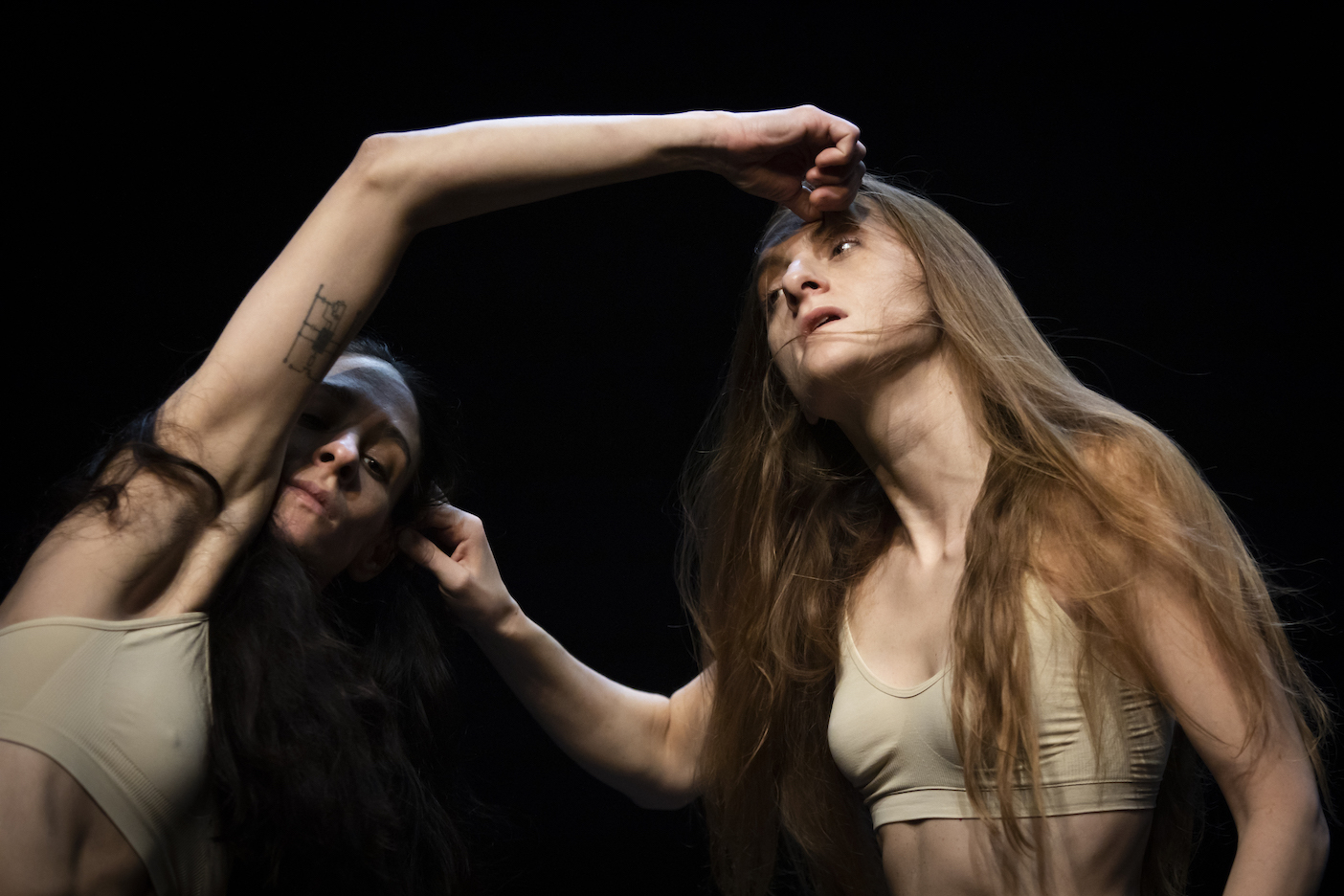
Magdalena Reiter has thus symbolically named her new performance Conversation pieces – not determining the direction and the force of the conversation – either between choreographer and dancer or between dancer and audience. The primary focus is on (women’s) bodies and their own monologues, their exhaustion and the limitations they face – the positioning of one against the other, the definition of one isolated body within the body of the group and within space and time itself. More significantly, the constellations within her choreographic language create visual references to perceptions of the female body that always avoid a complete interpretive definition.
These references are rooted in a collective memory of the history of art, especially sculpture, of the complexity and refinement of the body, but they are quickly disintegrated and terminated when we expect them to evolve further. They challenge with their fluidity and unfulfilled expectations of how the female body should move and behave on stage. The approach to the body becomes almost laboratory-like, anatomical, led astray by the most basic elements – the movement, which for a moment suggests sensuality, leads to a disintegration of the female body, flesh and skin. Bodies that are often partially hidden or immobilized become at the same time ghostly and sick. Fluid movement is stopped by its own saturation and repetitiveness. The space that opens up in the gaps is a critique of how we perceive the female body on stage, but also of our self-awareness of being seen and what we do in relation to that awareness. The space that opens up in the destruction, analysis and redefinition of imperfect and unexpected bodies is a space of transformation of understanding, left to the imagination of each individual observer.
– Vedrana Klepica


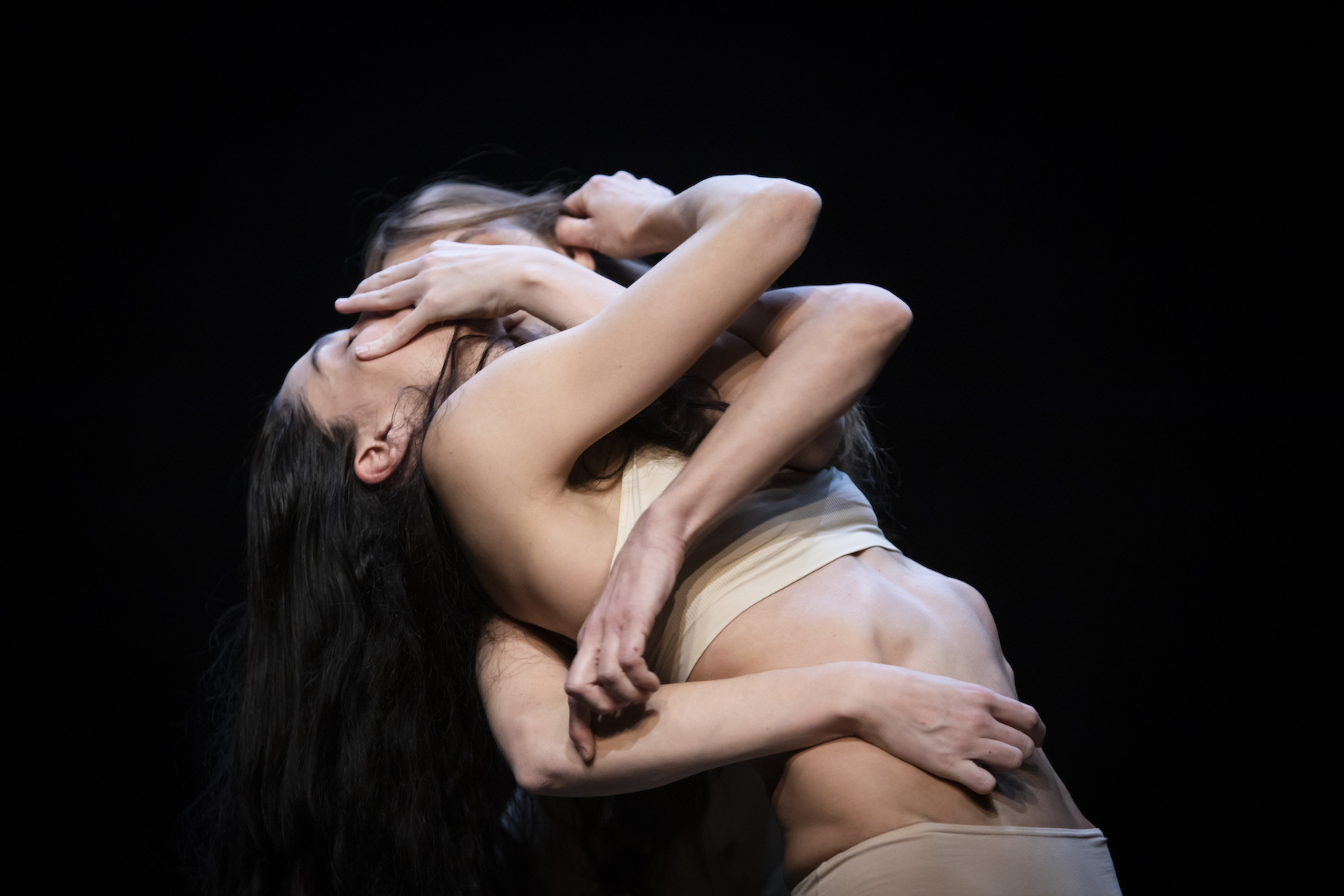
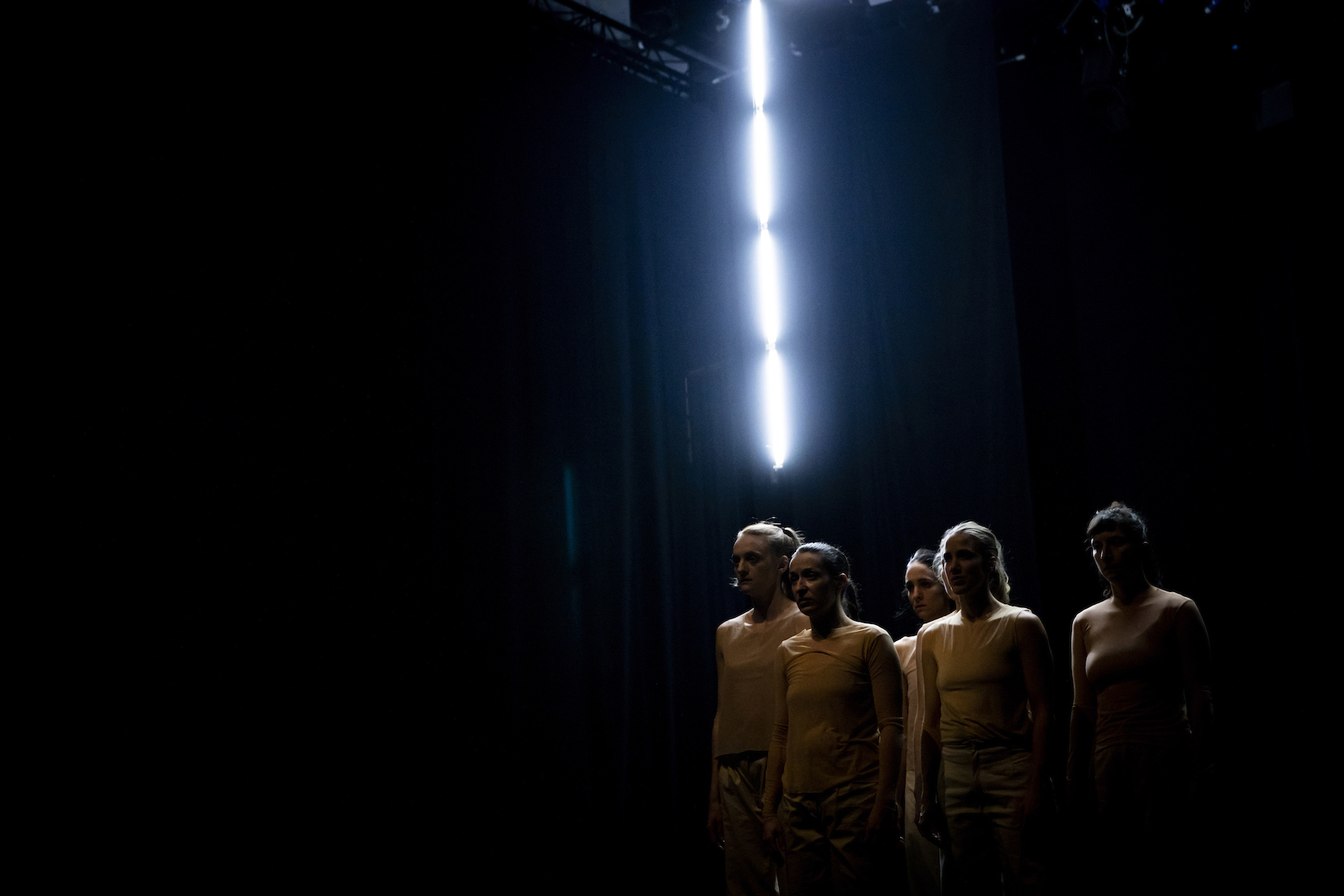

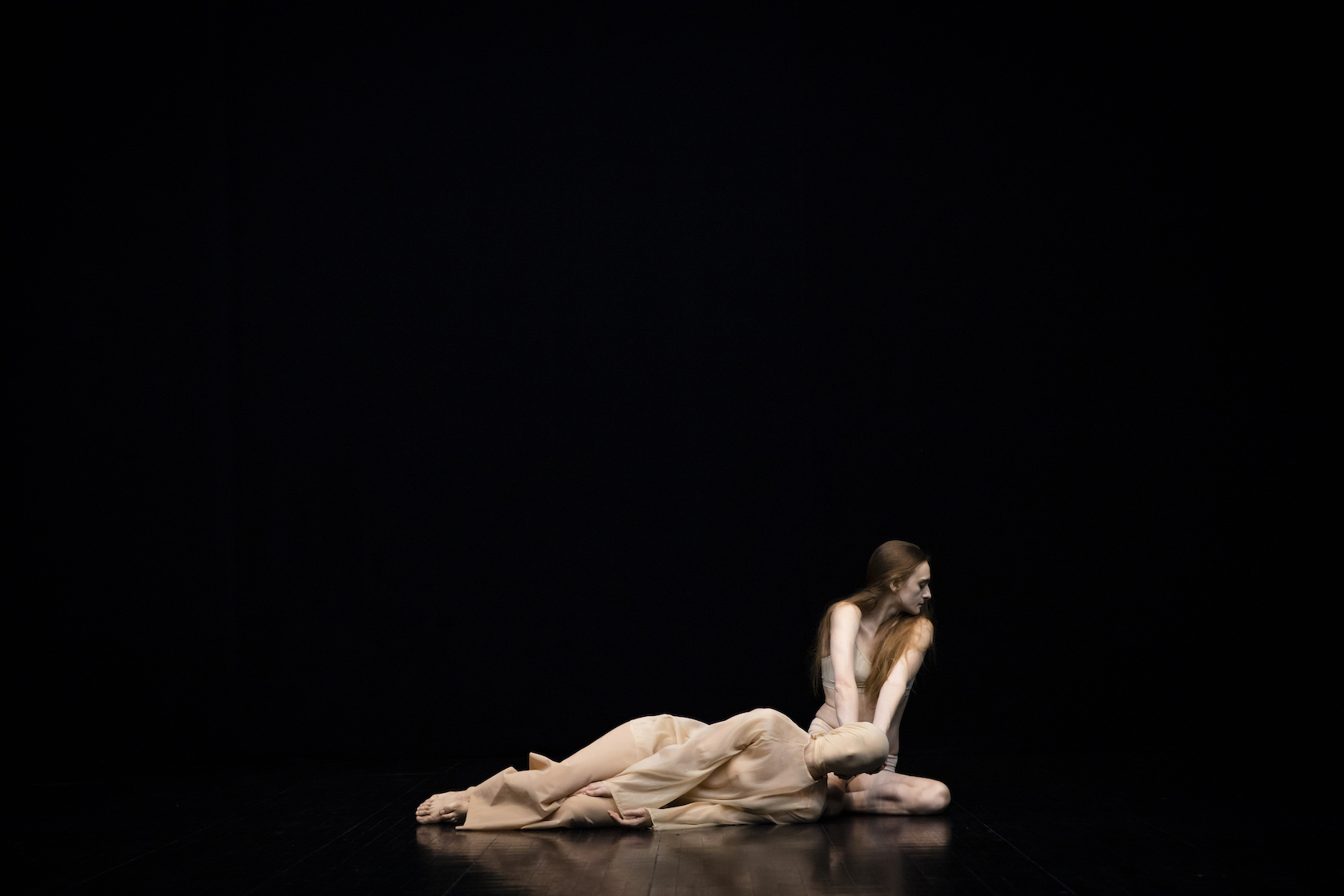
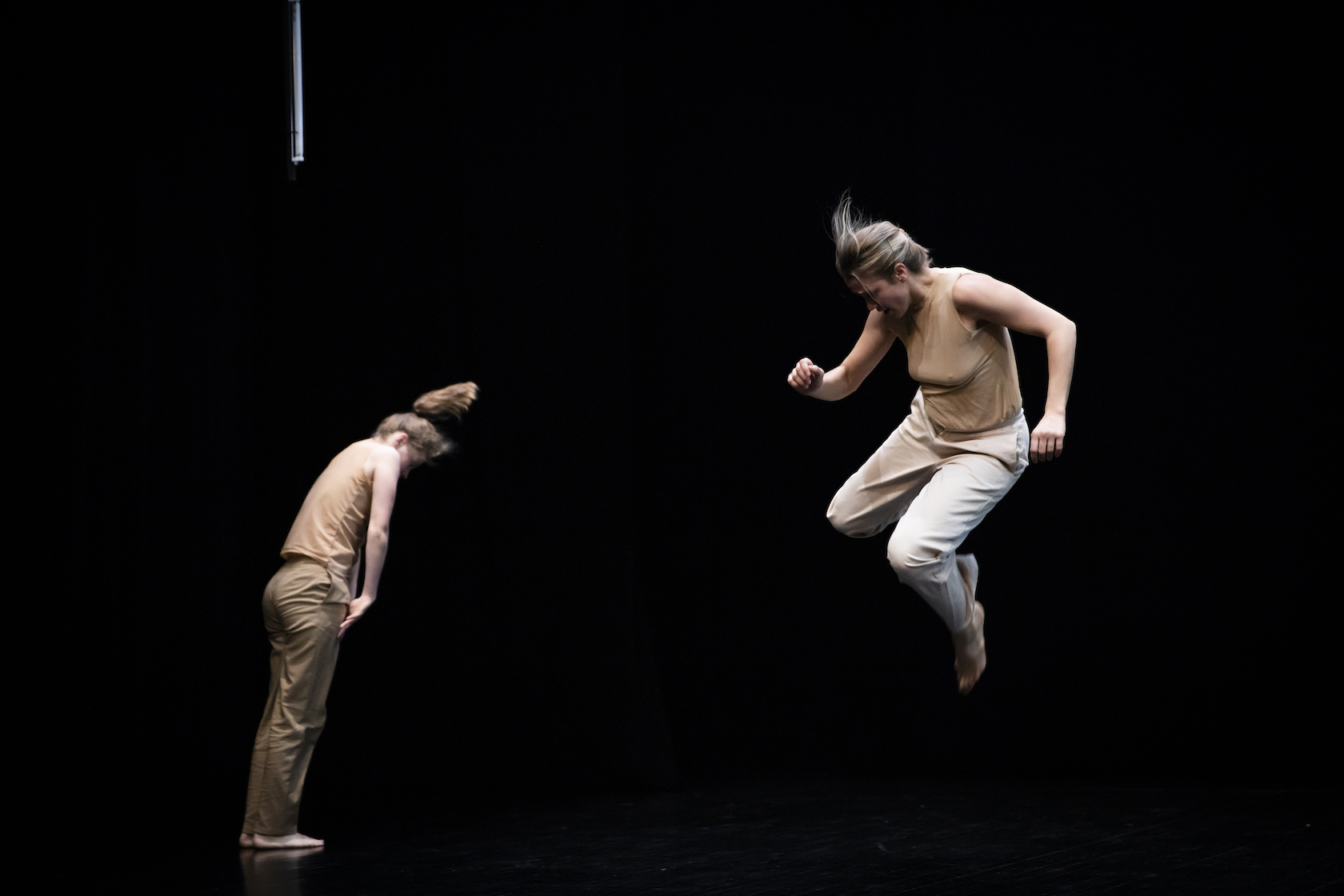



photography: ©Neven Petrović, ©Darja Štravs Tisu
Excerpts from review
“(…) different artistic disciplines work [in the performance] together to form a total theatre. It enchants and merges into another world. In fact, the performance speaks to me almost with some forgotten longing/question. As a person who has lived alone for a long time, is quite content and resigned to it, and then one fine day meets again a company, a fellow human being, and only then becomes retrospectively aware of the previous loneliness, this fullness (of the first and the third part) reminds me that perhaps we have just become accustomed to the contemporary “raw & casual & plain” approach in the performing arts (theatre). But that doesn’t mean that we don’t need that co-disciplinary complexity anymore or that it doesn’t give us anything (superfluous).”
– Neodvisni
 MIRABELKA